Student Centered Online Learning- A Short Review
| Student-Centered Learning I would like begin with the definition of Student-Centred Learning (SCL) I found in this publication issued by the European Students Union. “Student-Centred Learning represents both a mindset and a culture within a given higher education institution and is a learning approach which is broadly related to, and supported by, constructivist theories of learning. It is characterised by innovative methods of teaching which aim to promote learning in communication with teachers and other learners and which take students seriously as active participants in their own learning, fostering transferable skills such as problem-solving, critical thinking and reflective thinking.” (Attard et al, 2010). Zeki & Guneyli, 2014 in a study on participants of teacher education programme have also reported that the Student Centered Education (SCE) approach had a positive impact on the development of cognitive skills. It has helped them to develop their reflective, critical and creative thinking; problem-solving; and questioning skills. Group work activities have contributed to development of social and affective skills in this cohort. |
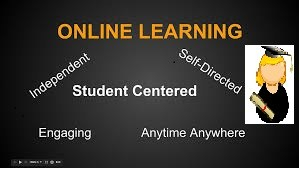
Images modified by Remixing |
Online Learning “With the advent of the Internet and the World Wide Web, the potential for reaching learners around the world increased greatly, and today’s online learning offers rich educational resources in multiple media and the capability to support both real-time and asynchronous communication between instructors and learners as well as among different learners. Online learning has become popular because of its potential for providing more flexible access to content and instruction at any time, from any place. In addition, online learning offerings are being designed to enhance the quality of learning experiences and outcomes” (Means et al., 2010). |

Blended Learning by Christophermccarthy CC0 |
Blended Learning Blended learning is a term applied to the practice of providing instruction and learning experiences through some combination of both face-to-face and technology-mediated learning. During the technology-mediated components of these learning experiences, students are not required to be physically together in one place but may be connected digitally through online communities. For example, one blended learning course could involve students attending a class taught by a teacher in a traditional classroom setting while also completing online components of the course independently, outside of the classroom, on an online learning platform (Cleveland-Innes & Wilton, 2018). |
| Student Centeredness with Online Learning In summary ‘Student Centeredness’ is evident during innovative approaches of online or blended learning |
| My Reflections This blog presents a short review on Student centeredness in Online learning. I have compiled an extract of a copyrighted article (text in parenthesis) with text and three other media items shared from sources published under Creative Commons licenses CC0, CC-BY and CC-BY-SA. I have listed all the attributions to the text extracts using APA referencing style. First image is a remix of two images with CC-BY-SA and CC0 while second image is having CC0. I have followed the acronym TASL, which stands for Title, Author, Source, License for attribution of images with relevant links embedded in the file name.. Since highest CC licence used is CC-BY-SA, I would like to apply the same license (CC-BY-SA) to my derivative work which is a free cultural works license. I must thank LiDA103 organizers for giving me guidance to produce this blog post. |
| References: Attard, A., Santa, R., Geven, K., & Di Iorio, E. (2010). Student-Centred Learning: Toolkit for Students, Staff and HigherEducation Institutions. Brussels: © European Students Union (All rights reserved article: extracted for review purpose) Cleveland-Innes, M., & Wilton, D. (2018). Guide to Blended Learning. Burnaby: COMMONWEALTH OF LEARNING. (Creative Common Licence CC-BY-SA) Means, B., Toyama, Y., Murphy, R., Bakia, M., & Jones, K. (2010). Evaluation of Evidence-Based Practices in Online Learning: A Meta-Analysis and Review of Online Learning Studies. https://www2.ed.gov/rschstat/eval/tech/evidence-based-practices/finalreport.pdf (Document in public domain. Authorization to reproduce in whole or in part has been granted) Zeki, Canan Perkan, & Güneyli, Ahmet. (2014). Student teachers’ perceptions about their experiences in a student centered course. South African Journal of Education, 34(3), 01-07 (Creative Common Licence CC-BY) |
License:
Jayantha Weerasinghe 
This work is licensed under a Creative Commons Attribution-ShareAlike 4.0 International License.
 jayanthaweera.blog


Leave a comment